Best Books of 2025

In 2025 I finished reading 48 books.

Best Book
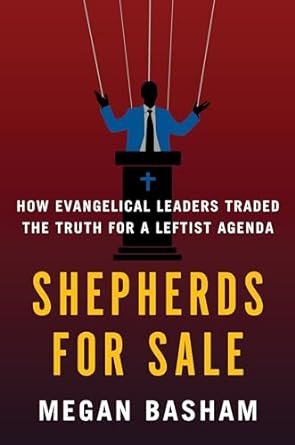
Shepherds for Sale: How Evangelical Leaders Traded the Truth for a Leftist Agenda, by Megan Basham. Published in 2024, Basham chronicles the efforts of American Evangelical pastors and church influencers leading churches to embrace leftist causes and soften their doctrine. Steeped in money (often) from non-Christian sources, they utilize “toxic empathy” (see the book by the same title, listed below) to transform churches away from Scriptural teaching. Basham carefully details the sad decline of once stalwart evangelical pastors and thinkers.


Notable Mention

Two other books stood out for me this year. David P. Scaer’s The Sermon on the Mount: The Church’s First Statement of the Gospel was a reread for me, as supplemental material for a class I’m teaching at church. I also profited from Patrick Henry Reardon’s 2012 book The Jesus We Missed: The Surprising Truth About the Humanity of Christ. Reardon, an Orthodox priest and scholar, is always worth reading.


Other Books Finished in 2025:

  • Sermons for Christmas and Epiphany (St. Augustine)

  • Orthodoxy and Heterodoxy: Finding the Way to Christ in a Complicated Religious Landscape (Andrew Stephen Damick)

  • The Late Show (Michael Connelly)

  • Total Power (Vince Flynn and Kyle Mills)

  • Changed Into His Likeness: A Biblical Theology of Personal Transformation (J. Gary Millar)

  • Demons: What the Bible Really Says about the Powers of Darkness (Michael S. Heiser)

  • The Lutheran Difference: An Explanation and Comparison of Christian Beliefs (Edward A. Englebrecht, ed.)

  • Broken Signposts: How Christianity Makes Sense of the World (N.T. Wright)

  • Wool (Hugh Howey)

  • The Bad Weather Friend (Dean Koontz)

  • The Secular Creed: Engaging Five Contemporary Claims (Rebecca McLaughlin)

  • Two Kinds of Truth (Michael Connelly)

  • Armored (Mark Greaney)

  • An Explanation of the History of the Suffering and Death of Our Lord Jesus Christ (Johann Gerhard)

  • What God Has to Say about Our Bodies: How the Gospel Is Good News for Our Physical Selves (Sam Allberry)

  • The Spirit of the Liturgy (Joseph Ratzinger)

  • The Spirit of the Liturgy (Romano Guardini)

  • Demonic Foes (Richard Gallagher)

  • Killing Floor (Lee Child)

  • Shift (Hugh Howey)

  • Relentless (Mark Greaney)

  • Dark Sacred Night (Michael Connelly)

  • Mike (P.G. Wodehouse)

  • Generations: The Real Differences Between Gen Z, Millennials, Gen X, Boomers, and Silents—and What They Mean for America’s Future (Jean M. Twenge)

  • Co-Intelligence: Living and Working with AI (Ethan Mollick)

  • The Metamorphosis (Franz Kafka)

  • Three Treatises on the Divine Images (John of Damascus)

  • Just Keep Buying: Proven ways to save money and build your wealth (Nick Maggiulli)

  • Deification in Christ: Orthodox Perspectives on the Nature of the Human Person (Panayiotis Nellas)

  • The First Thousand Years: A Global History of Christianity (Robert Louis Wilken)

  • The Trial (Franz Kafka)

  • On Christian Doctrine (Augustine)

  • Sierra Six (Mark Greaney)

  • Enemy at the Gates (Kyle Mills (Vince Flynn))

  • Prelude to Foundation (Isaac Asimov)

  • Openness Unhindered: Further Thoughts of an Unlikely Convert on Sexual Identity and Union with Christ (Rosaria Butterfield)

  • Oath of Loyalty (Kyle Mills)

  • The Night Fire (Michael Connelly)

  • Toxic Empathy: How Progressives Exploit Christian Compassion (Allie Beth Stuckey)

  • Fair Warning (Michael Connelly)

  • Dopamine Nation: Finding Balance in the Age of Indulgence (Anna Lembke)

  • The Law of Innocence (Michael Connelly)

  • From Strength to Strength: Finding Success, Happiness, and Deep Purpose in the Second Half of Life (Arthur C. Brooks)

  • Code Red (Kyle Mills)

  • Burner (Mark Greaney)

Trinity 26 (Observed) 2025

“I think I’m going to hell.” A text like today’s can provoke such a thought.

One wonders if the invention of purgatory was in part to deal with texts like today’s. I don’t meet the standard of the sheep, but perhaps if I can work off my sins in purgatory, then I might stand a chance.

But there is no purgatory. It’s taught nowhere in the Bible. It’s taught nowhere in the Apocrypha. It’s not nowhere in the first few centuries of Christianity. The Lord Jesus presents two stark realities – the sheep and the goats, the blessed and the cursed, the eternal kingdom or the everlasting fire, punishment or life….

Read More

Ash Wednesday 2025

“Receive the sign of the holy cross on both your forehead and your heart to mark you as one redeemed by Christ the crucified.”

These words from the liturgy of Holy Baptism should be on our hearts this night, when we are marked again by the sign of the holy cross, and reminded of our own impending death.

Yet aren’t we doing the very thing Jesus condemns? In the Gospel for Ash Wednesday, Jesus tells us not to disfigure our faces, not to appear to men to be fasting, and that we should wash our faces. Are we the hypocrites Jesus warns about?

Read More

There is no cause for anger

In his book The Sermon on the Mount: The Church’s First Statement of the Gospel, David P. Scaer draws out the true teaching of Jesus, obscured by textual assertions that accommodated man’s tendency to justify himself: there is no place for anger in the life of a disciple of Jesus.

One who is angry has taken to himself the prerogative that belongs to God alone. The phrase “without cause” does not belong to the original reading. Even if there is a cause for anger, anger must be put aside among the followers of Jesus. There is no cause for anger. Though anger is the prerogative of God alone, in his work of reconciliation in Jesus he has set aside this anger. This makes the offense of anger even more repugnant. By becoming angry the one who claims to belong to Jesus and to know his mind takes an attitude diametrically opposed to God, who is no longer angry. The refusal to be reconciled is the sign that the person no longer belongs to Jesus and from God’s point of view is no longer a member of the community. Here is where excommunication becomes operative.
— David P. Scaer

Jeffrey Gibbs’ excellent article “The Myth of Righteous Anger” expands on this and is highly recommended.

Eighth Sunday after Trinity 2024

‌I just finished reading The Infinite Game, a book by Simon Sinek. He says many people, companies, and countries are playing the wrong game; they’re serving short-term goals instead of infinite ones. There’s some worth to the book, but it’s not without flaws. One of its weaknesses is in what he calls “ethical fading.” This is where you have a gradual compromise of ethical standards in, say, what a corporation allows in its business practices. The problem is he assumes an ethical standard without ever defining it or establishing any foundation for ethics. For us, as disciples of Jesus, He is the foundation of all ethics and all Truth. In short, ethics is derived from the Word of God….

Read More

Blessed Are the Losers

“The Be Happy Attitudes,” they’ve been called. The opening sayings of the Sermon on the Mount, today’s Gospel, are usually referred to as the Beatitudes. It’s from the repeating word Blessed, which in Latin is Beati. Beati pauperes spiritu. “Blessed are the spiritual paupers.” I doubt that’s what people mean when they say they’re spiritual but not religious.

Robert Schuller popularized the idea that blessed is really an attitude. In his book The Be Happy Attitudes, Schuller writes, “Blessed literally means ‘happy.’ So … you can be happy if you will discover the eight positive attitudes given to us by Jesus in the Beatitudes.”

I want you to be happy. But blessedness is something far deeper than happiness. Blessedness transcends happiness. Blessedness helps us survive all the unhappy things. Blessedness is not an attitude. It’s a condition, a state, a status…

Read More