Quasimodo Geniti 2026
Quasimodo Geniti
April 12, 2026
St. John 20:19-31
Alleluia! Christ is risen! He is risen indeed! Alleluia!
“Today you will be with Me in paradise” said Jesus to a criminal crucified with Him.
When Jesus says, “Peace to you,” He is saying the same thing.
“I baptize you in the name of the Father and of the Son and of the Holy Spirit.” That’s also the same.
Jesus speaks peace to penitents. Jesus speaks promises to penitents. Jesus speaks forgiveness to penitents.
There’s nuance of course. Baptism, Bible reading, Absolution, and the Lord’s Supper are not all exactly the same thing. But the core content is the same. God is moving you from corruption to integrity. God is moving you from darkness to light. God is moving you from death to life.
He does this through the means of grace. That term, the means of grace, is just a way we categorize certain grace-filled gifts from God. Bible reading, baptizing, forgiving, and Eucharist are all delivering to you God’s grace.
In today’s Gospel, Jesus tells the Apostles to go and tell people about His resurrection and forgiveness. You have something similar at the end of Matthew, where Jesus tells the Apostles to go and make disciples by baptizing and teaching. These are all works of the Holy Spirit. The call for the apostles to go and absolve is preceded by Jesus giving them the Spirit. In Acts 2, when the people are brought to contrition for their sins, Peter announces to them the gift of Baptism, which bestows forgiveness and the Holy Spirit. He even says it is for the children along with their parents. Jesus established means to deliver to us His gifts.
Remember a couple of weeks ago, we saw that the New Testament never calls pastors “priests.” We have other words like bishops, presbyters, pastors, rulers, teachers, and deacons – but never priests. That’s because Jesus is the last and final priest. He is the one mediator between God and man.
So why do we have pastors at all? And why is it me, or Pr Hoham, or some guy with a chasuble on up here, and not just anyone? It’s not because there is a special holiness of the pastor that makes the means of grace operative or efficacious. The pastor doesn’t have some special power to “make sacraments.”
But there is a reason that certain men are ordained, or put into the office. St. Paul says in Ephesians that Jesus gives the Church pastors to “equip the saints to do works of service, to build up the body of Christ, to bring unity to the church and help people become mature” [4.11-13]. The Augsburg Confession, one of the great statements that helped reform Christ’s Church, talks about this in a very simple way. After showing the Bible’s teaching that God justifies us by faith (AC IV), it then says that God instituted the preaching office so people could obtain this faith (AC V). The office is charged with delivering the means of grace to the people.
The Bible gives certain qualifications for the office. The man is ordinarily married, he can’t be divorced, he takes care of his wife and kids, he doesn’t get drunk, and he has to be able to teach. (That’s in 1 Tim. 3, et al.)
Teach what? The Bible. Elsewhere Paul says the pastor should chiefly spend his time reading the Bible, teaching the Bible, and praying for the people. In the book of Acts, the apostles get super busy doing administrative things, so they appointed “deacons” to take care of the administrative stuff, like their food ministry.
Whatever else we do as a church, we must always keep the means of grace at the center of the church’s life: “If you forgive the sins of any, they are forgiven them; if you retain the sins of any, they are retained.” Sometimes it’s the pastor’s job to say to someone, “You shall not commit adultery,” or, “Stop telling lies.” “Hey, the way you acted the other day really hurt your brother. You need to apologize.” Now anyone can do these things. But for good order, it becomes the pastor’s duty to do it on the church’s behalf.
And when the person repents, nothing makes the pastor, and the whole church, more happy than to say, “You are forgiven.”
There are very complicated theological problems. The Son of God is one person with two natures, divine and human. The bread of the Supper is also the body of Jesus. God loves babies and gives them faith before they can even talk, and He does it through water and words.
But the most complicated theological problem of all, as I said on Good Friday at noon, is letting forgiveness get the upper hand in our life. God forgives our sins, and we forgive each other, even the people in our life who make it difficult.
That’s the big thing that happened on the cross. God forgave the world. And Jesus rises from the dead and tells His apostles, “Go and do likewise.”
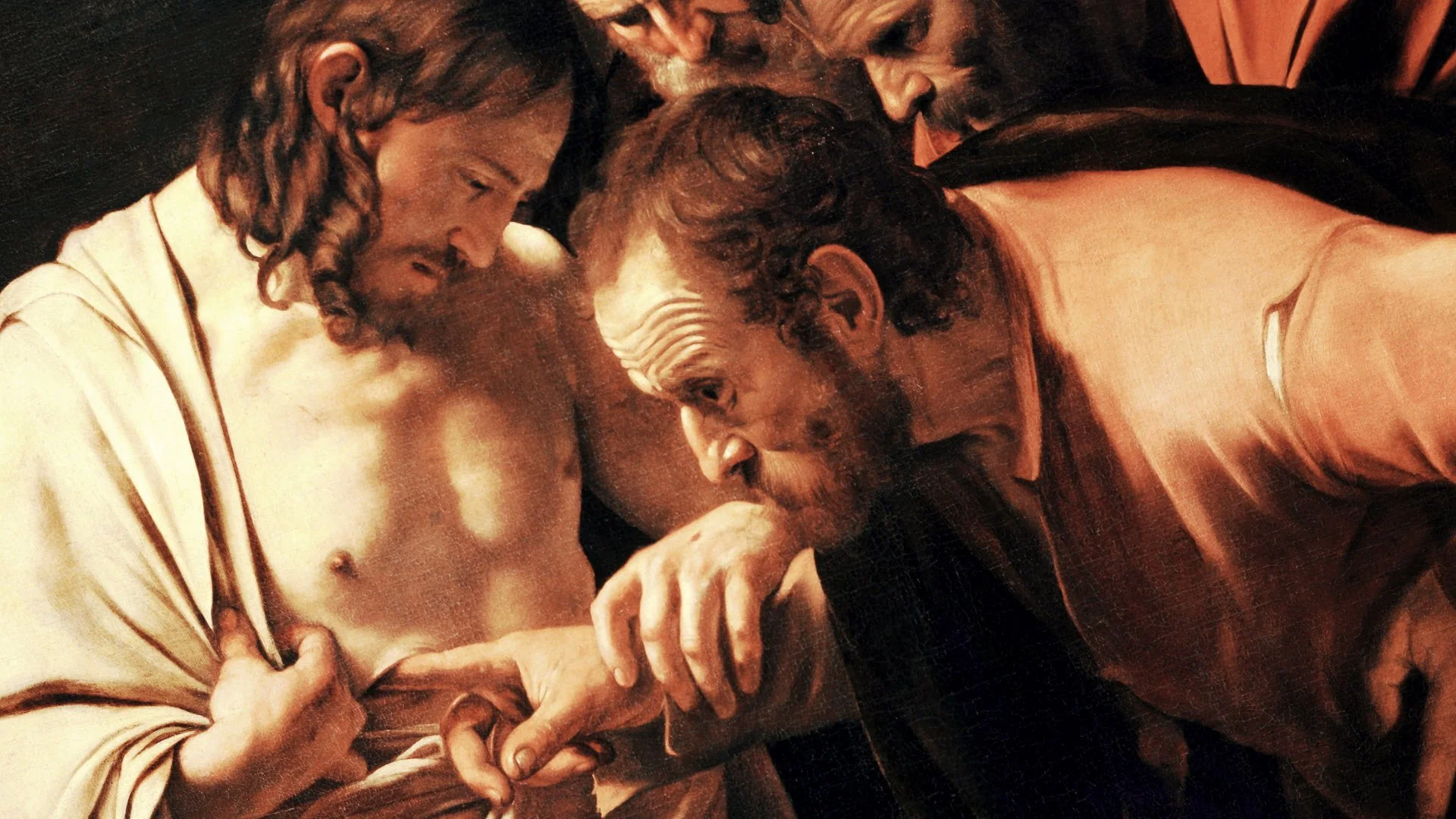
Thomas doesn’t believe it. The resurrection part. And without that, there’s no forgiveness. There’s just death. And bitterness. And grab what you can, because the music is ending soon and there probably won’t still be a chair for you.
So Jesus shows up again. The next Sunday. He keeps showing up on the first day of the week. That’s why the Apostles called it the Lord’s Day. It’s why we worship on Sundays.
Thomas missed Easter Sunday. Thus he doesn’t believe Jesus is risen. So next week Jesus shows up and repeats Thomas’ doubts back to him.
Then comes the climax of John’s Gospel. This is the whole reason he wrote it. It’s all to bring us to Thomas’ confession: “My Lord and my God!”
If Jesus is just a martyr for some socialist cause, then the world is doomed.
If Jesus is just a good teacher, then you are still in your sins.
But He is not those things. He is Lord and God. And today you are called to confess with Thomas that Jesus is your Lord and your God.
If Jesus is your Lord, your God, then everything changes. You become a forgiveness person. You become an Easter person.
You have the promise He gave to the criminal: “You will be with Me in paradise.”
You have the Word He gave to so many people sick in mind, body, and soul: “Be of good cheer, your sins are forgiven. Go and sin no more.”
You have the Word He gave to Lazarus, whom He called from His tomb.
These are the words now marking your life. To you Jesus says this day: “You will be with Me in paradise. You are absolved. I hold nothing against you. I have conquered death. I have conquered all your foes. Your folly is forgotten. Your sin is put away.”
All of that is in those three little words, “Peace to you.”
Jesus speaks them to you still. They are your life. And they are the life of your wife, your children, and all whom you meet along this life’s road. Speak them. Absolve your enemies. They may hate you still. Or not. In any case, don’t let it hold your soul hostage any longer. Jesus gives you His peace. That’s all that matters. His peace will bring you to the resurrection of the dead and life in the unending kingdom.
Alleluia! Christ is risen! He is risen indeed! Alleluia!
Alleluia! Christ is risen! He is risen indeed! Alleluia!
Alleluia! Christ is risen! He is risen indeed! Alleluia!